.png)
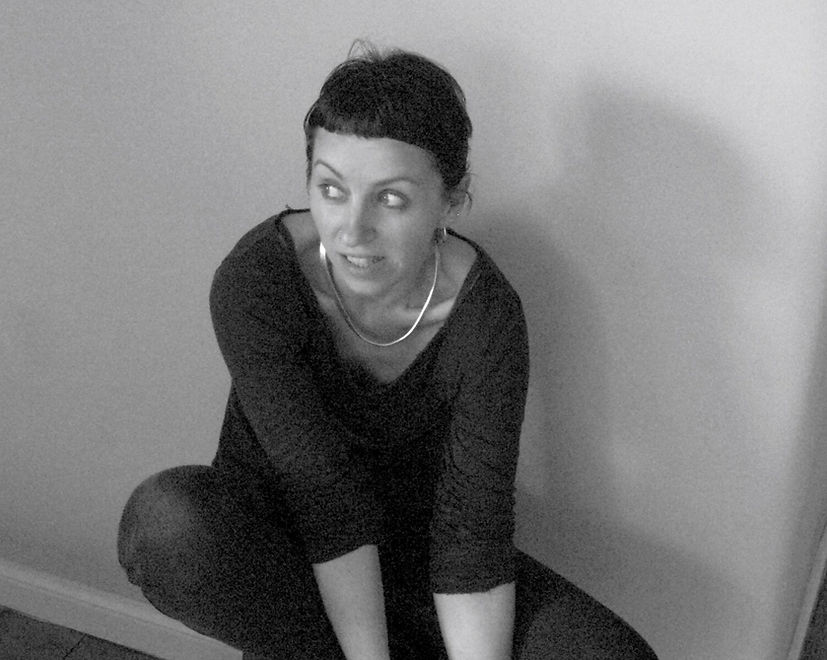
photo credit: Elise Hurcombe
I've spent much of my life following a single question:
Not how we move, but what moves us.
As a movement practitioner, artist and researcher, I was deeply influenced by the work of Pina Bausch, whose question has accompanied me for many years. For more than twenty-five years, my work explored how movement, stillness and unexpected moments of encounter could interrupt the ordinary, inviting people to experience themselves, one another and the spaces between us with greater presence, wonder and care.
Looking back, I can see that I have always been interested in the conditions that allow something more truthful to emerge. Whether through dance, conversation or silence, I have been drawn to the quiet transformations that become possible when attention is offered faithfully.
My relationship with language has been equally important. Feminist philosophy, embodied writing practices and years of artistic research have profoundly shaped how I listen, think and work. I have come to understand language not simply as a way of describing experience, but as something that can open new ways of experiencing ourselves and the world.
A recent autism diagnosis has brought many aspects of my life into deeper focus. It has invited me to question not only how I experience the world, but which forms of knowing our culture teaches us to trust - and which it quietly asks us to doubt.
I am still learning to trust the intelligence of my body, my nervous system, and the quieter ways of knowing that, for many years, I learned to set aside in favour of the expectations of the world around me.
Reclamation, for me, is not a return to someone I once knew.
It is an ongoing act of devotion to someone I am still becoming.

My practice has evolved over more than twenty-five years through movement, artistic research, coaching, grief work and embodied enquiry. Rather than adopting a single model, I've spent my life listening for the conversations that can happen between different ways of knowing. The practice I offer today has grown from that ecology.

The ecology of my practice
I believe attention changes what becomes possible.
Not because someone else tells us who we are, but because the quality of attention we receive gradually shapes the quality of relationship we learn to build with ourselves.
In a culture organised around urgency, certainty and performance, this kind of attention is quietly countercultural. It does not hurry. It does not persuade. It does not ask you to become someone else. It stays long enough for something true to begin to emerge.
This belief sits at the heart of everything I offer.
No philosophy grows alone.
My work draws from more than twenty-five years of creative, embodied and therapeutic enquiry, informed by the Thinking Environment®, transpersonal and Jungian perspectives, Polyvagal-informed and Somatic Justice practice, grief ritual, site-specific artistic research, and a lifelong devotion to movement, imagination and language.
I have been shaped by the work of Nancy Kline, Francis Weller, Joanna Macy, Thomas Hübl, Báyò Akómoláfé, Staci Haines, Prentis Hemphill, Linda Thai and many others whose work continues to deepen my own.
You can read more about the foundations and training that shape my practice here.
Over time, I found myself drawn to questions that sit at the edges of many disciplines but belong fully to none: belonging, attention, imagination, embodiment, grief, discernment and participation. Rather than searching for a single framework, I began listening for the conversations that could happen between them.
These influences have helped me recognise that human beings know in many different ways. Our bodies know. Our emotions know. Our imagination knows. Our thinking knows.
My practice is less interested in ranking these ways of knowing than in creating the conditions in which they can begin listening to one another.
I believe attention restores relationship.
Relationship deepens discernment.
Discernment strengthens authorship.
And authorship makes a more wholehearted participation in life possible.
An invitation
If something in these words feels familiar...
If you are longing for more spaciousness.
If you are weary of leaving yourself behind in order to belong.
If you sense there may be another way of listening to yourself, trusting your own ways of knowing and participating more fully in your life...
...perhaps we'll think well together.
I'd be honoured to meet you there.
"real voyage of discovery consists not in seeking new lands but seeing with new eyes."
Marcel Proust